
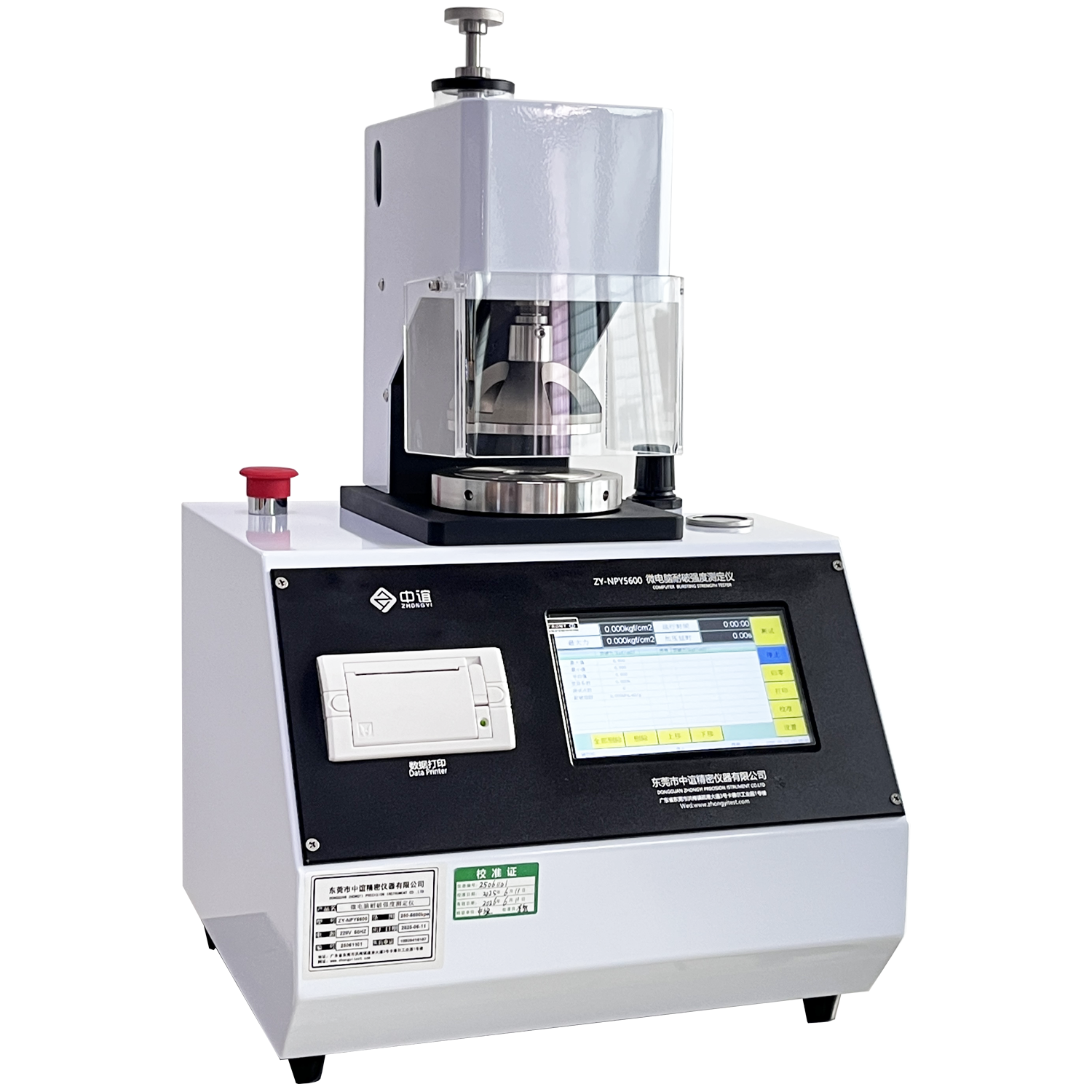
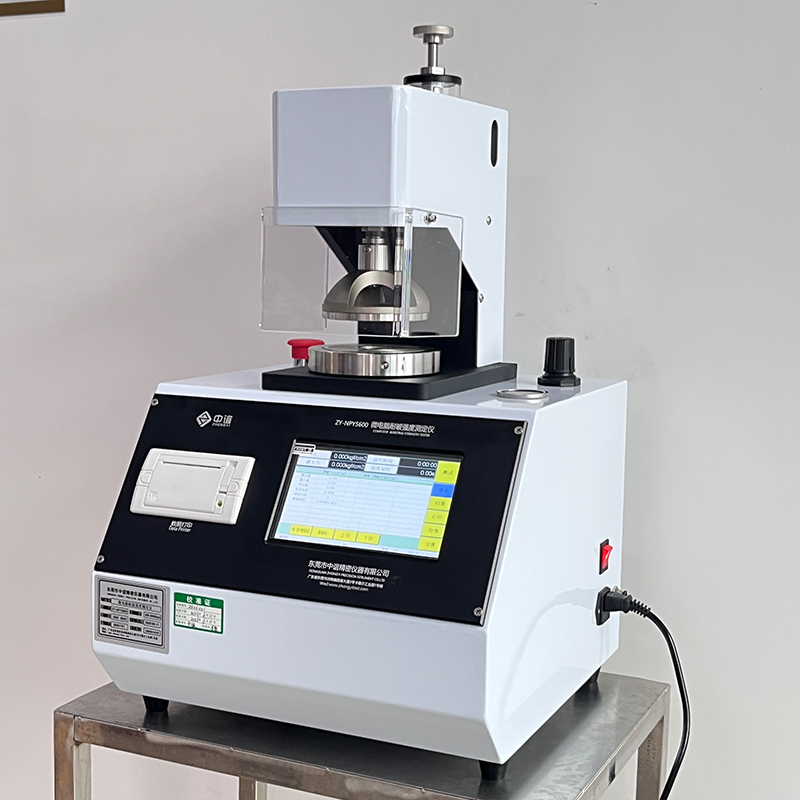
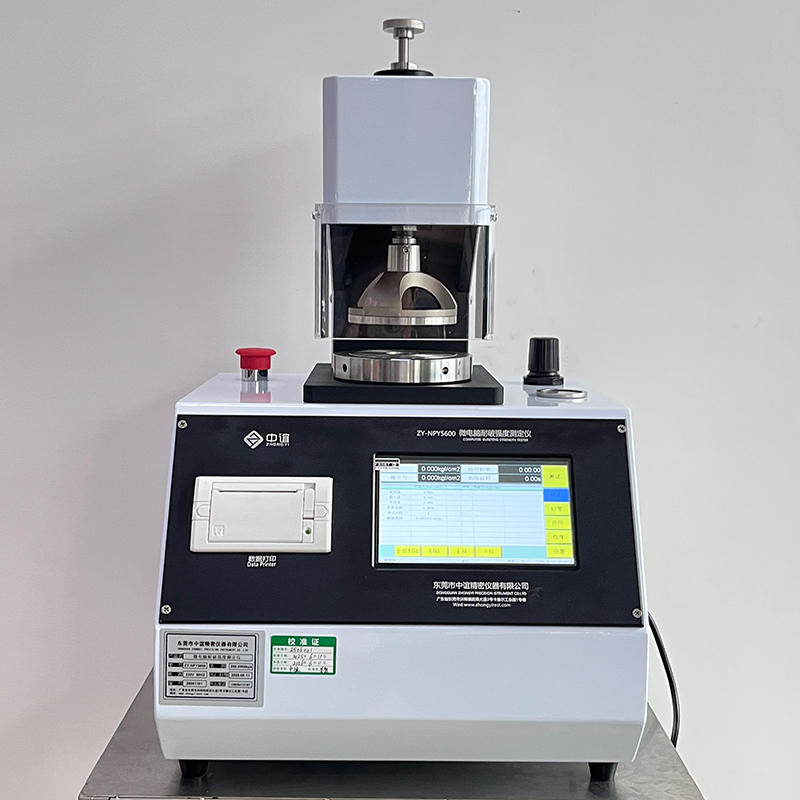


Product Overview of the Crush Resistance Tester:
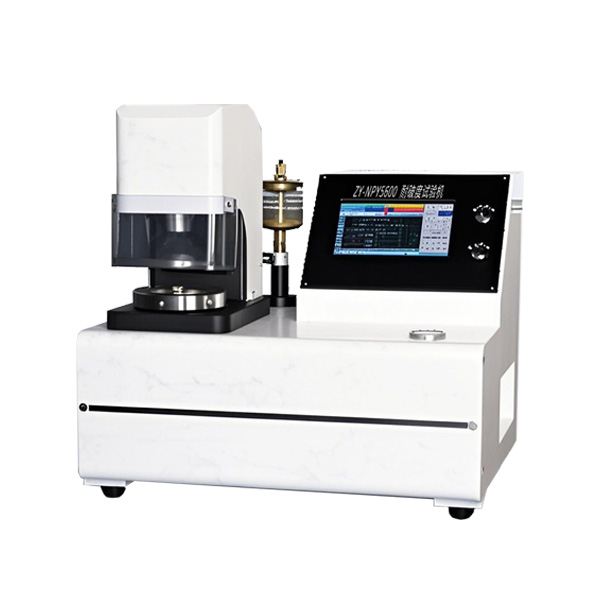
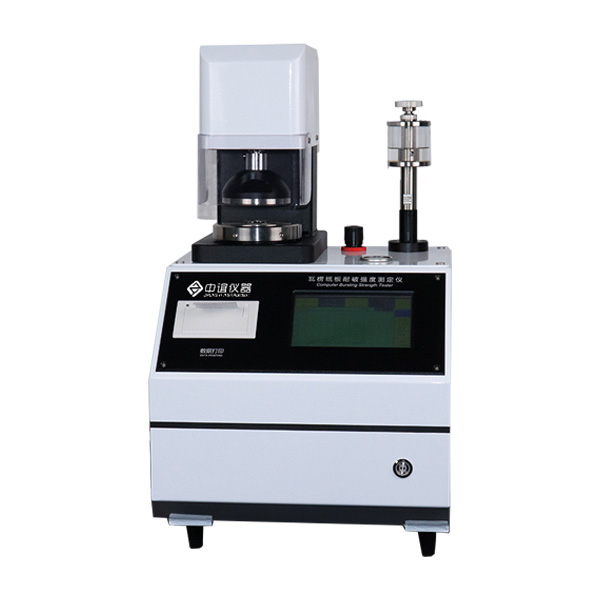
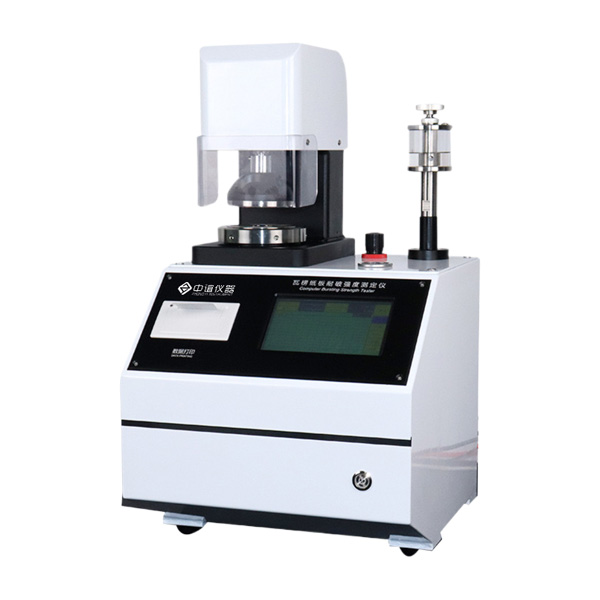
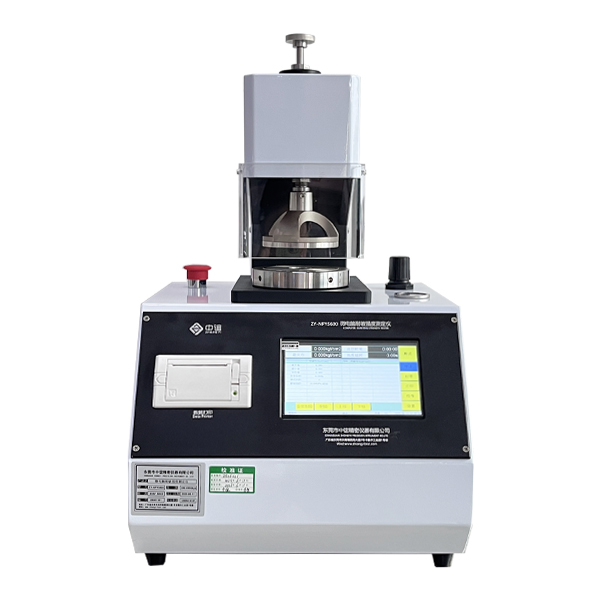
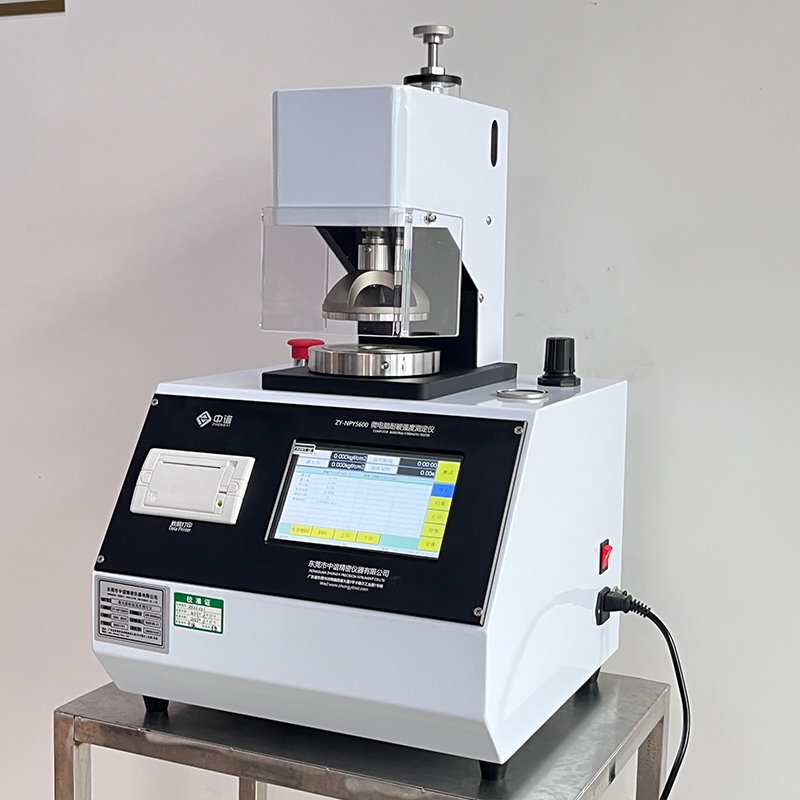
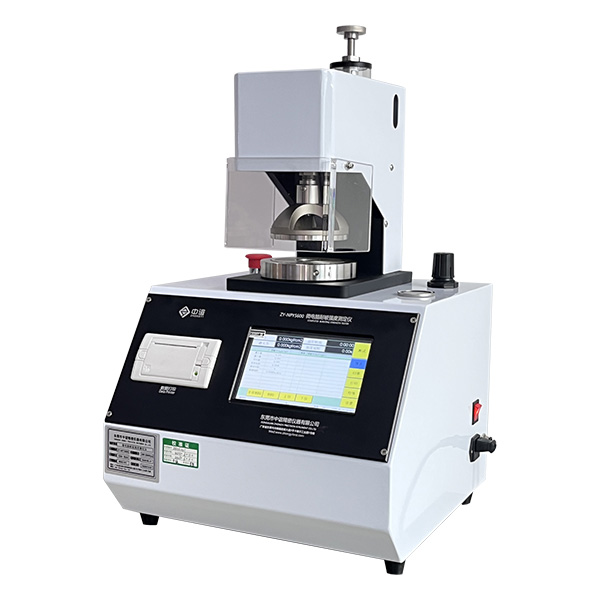
The aluminum foil burst strength tester (also known as an aluminum foil rupture strength tester or burst strength tester) is a specialized testing instrument designed to accurately measure the maximum pressure (burst strength, in kPa) that aluminum foil, aluminum alloy foil, and similar thin sheet materials can withstand before rupturing under uniform hydraulic pressure. It is an essential quality control and R&D tool for industries such as aluminum foil manufacturing, packaging, pharmaceuticals, and lithium-ion batteries.
Performance Advantages of the Crush Resistance Tester:
1. 7.0-inch touchscreen display with seamless switching between Chinese and English;
2. Pneumatic sample clamping; film burst testing method;
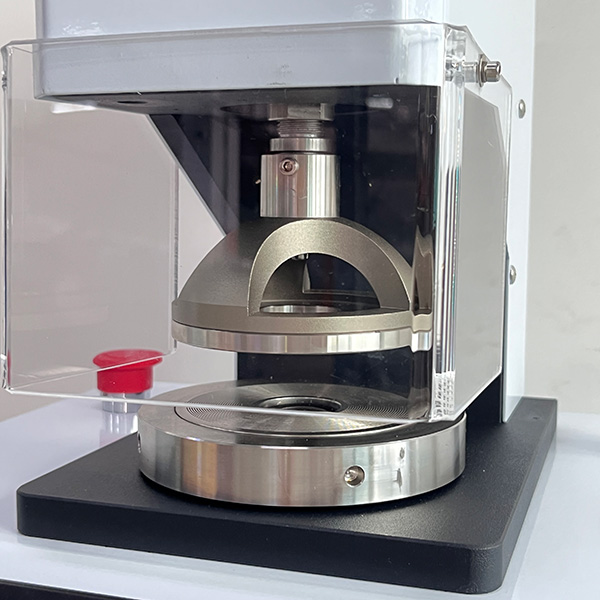
3. The pressure plate features a circular opening aligned with the test axis, ensuring stable and more accurate data;
4. Automatic sample clamping eliminates operator influence during the testing process;
5. Sealed test indenter prevents film rupture;
6. Built-in calibration system with delayed pressure application control and delayed pressure release control; automatically resets after testing;
7. Built-in upper and lower limit protection devices and overload protection; film rupture is prevented even during empty testing or when exceeding the protection range.
8. Equipped with a dual-seal oil circuit system, ensuring high-strength, high-pressure sealing throughout the entire oil circuit to prevent oil leaks, thereby enhancing service life and stability;
9. Powerful data analysis capabilities display real-time test variations, including instantaneous force, strength, clamping force, maximum value, minimum value, average value, and burst index.Performance Advantages of the Crush Resistance Tester
Applications:
1. Pharmaceutical packaging (PTP aluminum foil): Ensures that blister packs do not rupture during forming, heat sealing, or transportation, and comply with pharmacopoeia requirements.
2. Food packaging: Tests the burst resistance of household aluminum foil, laminated aluminum film, and retort pouches.
3. Lithium Batteries: Test the strength of ultra-thin battery aluminum foil (6–12 μm) to prevent breakage during electrode fabrication.
4. Quality Control: Used for incoming material inspection, random outgoing product inspection, process optimization, and R&D testing.


 豫公网安备41032502000206号